


Home Wheelchair Ramps
41 products

41 products
Find the right wheelchair ramp for your home, from threshold ramps for door sills to portable ramps for steps and modular aluminum ramps with handrails for porches and front doors. Every ramp installs without concrete or construction. Not sure what you need? See our sizing guide below or call 888-307-1839 for a free custom design.
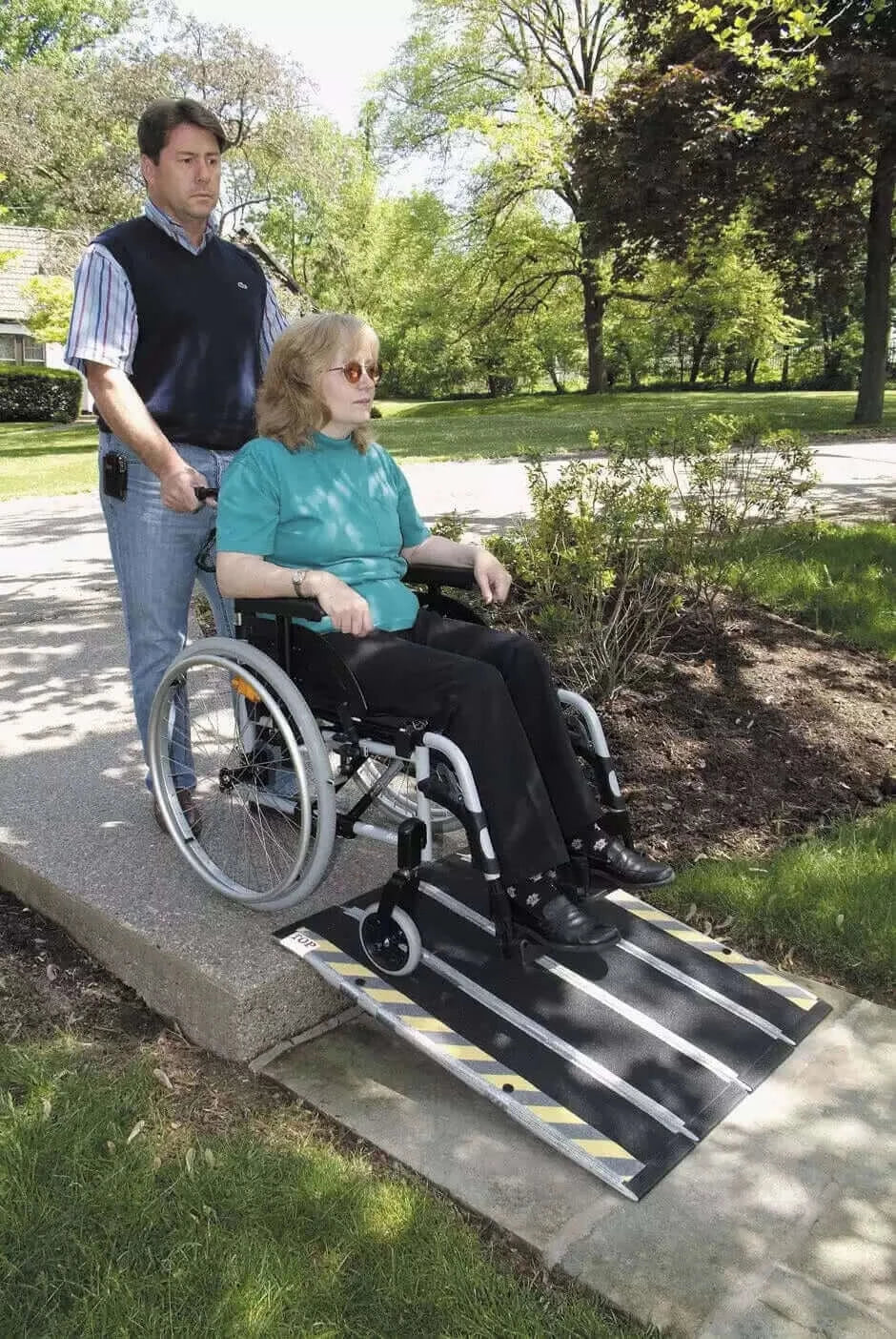
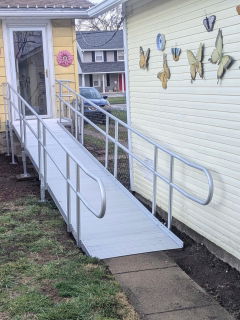
A home wheelchair ramp makes it possible to get in and out of the house safely in a wheelchair, power chair, scooter, or walker, without being lifted or relying on someone else. The right ramp depends on your entry: a small lip at the door needs a threshold ramp, a few steps can be covered with a portable ramp, and everyday access to a porch or front door is best served by a modular aluminum ramp with handrails. We carry home ramps from RampIt USA, PVI, Roll-A-Ramp, AlumiRamp, National Ramp, SafePath, and American Access.
Modular and portable aluminum ramps install without digging, concrete, or permanent changes to your home.
From a 1/2" threshold to a porch several feet high, with landings and turns to fit your yard.
Aluminum won't rot, rust, or need painting, and it can be moved or reconfigured if your needs change.
| Total rise | Ramp length at 1:12 | Typical setup |
|---|---|---|
| Up to 3" | Up to 3' | Threshold ramp |
| 6" | 6' | Single-fold portable or short modular ramp |
| 12" | 12' | Modular ramp, straight run |
| 18" | 18' | Modular ramp with top landing |
| 24" | 24' | Modular ramp, straight or L-shaped |
| 30" | 30' | Modular ramp with a turn or rest landing |
| 36"+ | 36'+ | Switchback modular ramp with landings |
Always measure your actual rise. Lengths don't include landings.
Not sure? Try our ramp length calculator, or call a ramp expert at 888-307-1839.
| Ramp type | Best for | Installation | Things to know |
|---|---|---|---|
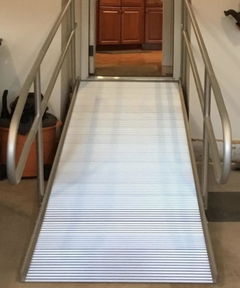
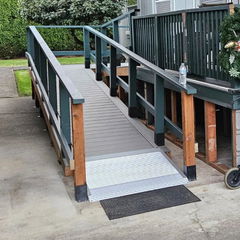
| Modular aluminum | Everyday access to a porch, deck, or front door | Bolts together on adjustable legs, no concrete | Handrails included; can be moved or expanded later |
| Portable | A few steps, visits, recovery, or renters | Sets in place in minutes | No handrails; best for shorter rises |
| Threshold | Door sills, sliding doors, and small steps | Sits in place | Made for low rises only |
| Wood | Custom builds | Built on site by a contractor | Needs sealing and upkeep; can be slippery when wet |
Our most popular permanent home ramp, made in the USA with handrails and a non-slip surface.
Shop RampIt USA modular rampsFolding, rollable, and multi-fold ramps for steps and temporary access.
Shop portable rampsPopular picks: the RampIt USA Independence modular ramp with handrails, Roll-A-Ramp rollable ramps, and National Ramp Approach Series threshold ramp. Covering steps? See ramps for stairs and aluminum wheelchair ramps.
Measure the height from the porch floor to the ground and plan 1 foot of ramp for every inch of rise. A 24" porch needs about 24' of ramp, plus a level landing at the top. Longer ramps can turn or switch back to fit your yard.
It depends on your city and county. Many areas don't require a permit for a freestanding modular aluminum ramp, while others do, especially for larger ramps or ones attached to the house. Check with your local building department before installing.
ADA rules apply to public and commercial buildings, not private homes. Following ADA guidelines at home is still the safest approach: a 1:12 slope, a 36" clear width, handrails on longer ramps, and level landings.
It depends on the rise and type. Threshold ramps start under $100, portable ramps run from about $100 to over $1,000, and modular aluminum ramps with handrails typically run from about $1,000 for a short ramp to several thousand dollars for longer ramps with landings. We'll quote your exact setup for free.
Medicare generally doesn't cover home ramps because they're considered home modifications. Help may be available through VA home modification grants for veterans, state Medicaid waiver programs, your local Area Agency on Aging, or nonprofit groups. Ask us for an itemized quote to submit.
Yes. Modular aluminum ramps bolt together on adjustable legs with basic hand tools and don't need concrete or footings. Most homeowners or a handy friend can install one in a day.
Handrails are strongly recommended for any ramp with more than 6" of rise or longer than 6'. Modular ramps include handrails; most portable and threshold ramps don't, so they're best for short rises.
Send us your measurements and a photo of your entry, and our ramp experts will design the right layout and send you a free quote.
Get a free custom design Call 888-307-1839