


Patient Lifts for Morbidly Obese & Bariatric Patients: 2026 Buying Guide
Lifting a heavier person safely takes more than a bigger motor. The lift, spreader bar, sling, and even the room all have to be up to the job, and caregivers need a setup that protects their backs too. This guide explains how to choose a bariatric patient lift for a person of size, compares the floor and ceiling lifts we carry from 560 to 1,100 lbs, and covers slings, space, and safety.

Quick Answer: Choosing a Bariatric Patient Lift
- Capacity: pick a lift rated comfortably above the person's current weight. Bariatric lifts we carry are rated 560 to 1,100 lbs, and bariatric slings go up to 1,100 lbs.
- Weakest link rules: the lift, spreader bar, sling, and any scale must all be rated for the weight. The lowest rating is your limit.
- Powered features (electric lifting and a powered leg base) reduce caregiver strain.
- Ceiling lifts are often preferred for very heavy people because no one has to push the load across the floor.
- Plan the space: room to turn, doorway widths, and a base that opens wide enough around a bariatric wheelchair or commode.
What Makes a Patient Lift "Bariatric"?
There's no single legal definition, but health systems usually draw the line around 300 pounds or a very high BMI. One VA hospital's safe patient handling program, for example, defines bariatric patients as those who weigh more than 300 pounds and have a BMI of 50 or greater. One safe patient handling expert puts it this way: traditional lift equipment has a weight limit of about 450 pounds, while bariatric equipment can handle up to 1,000 pounds.
A bariatric lift isn't just a stronger lift. It typically has:
- A higher safe working load (SWL), often 600 to 1,000+ lbs
- A wider spreader bar or cradle so the sling doesn't squeeze the shoulders and hips
- A wider, sturdier base for stability with a heavier load
- Powered lifting, and often a powered base that opens the legs at the push of a button
Bariatric Lift Finder
Enter the person's weight to see which of our lifts and slings are rated for it.
Which lifts are rated for this weight?
Ratings are manufacturer safe working loads. Leave a margin for weight gain, and confirm the sling, spreader bar, track, and any scale are rated just as high.
Bariatric Patient Lifts Compared
| Lift | Type | Safe working load | Stand-out features |
|---|---|---|---|
| Molift Air 500 | Ceiling lift motor | 1,100 lbs | Highest capacity we carry; lifts overhead with no pushing |
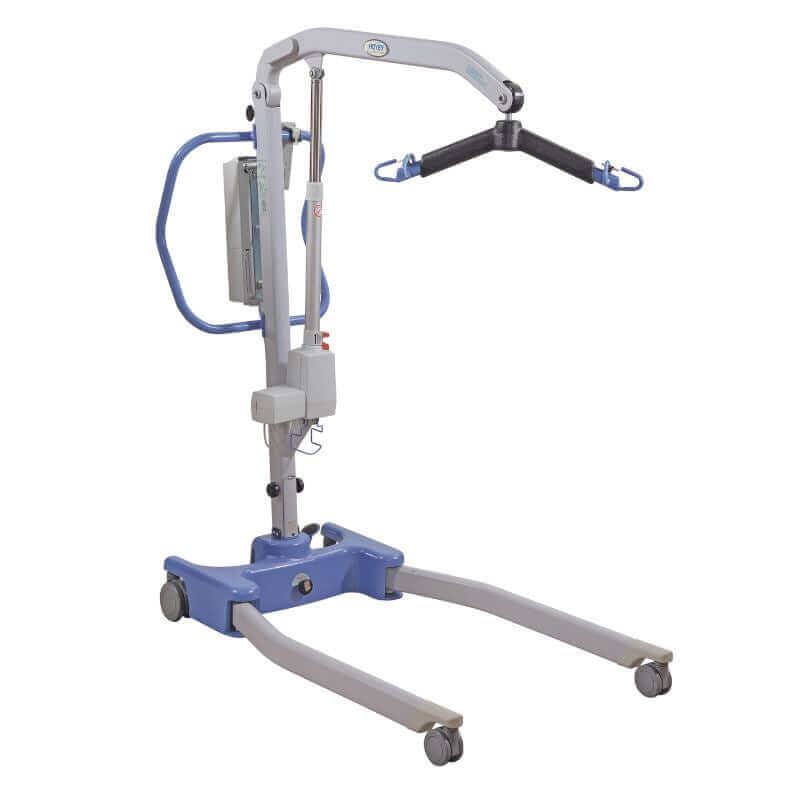
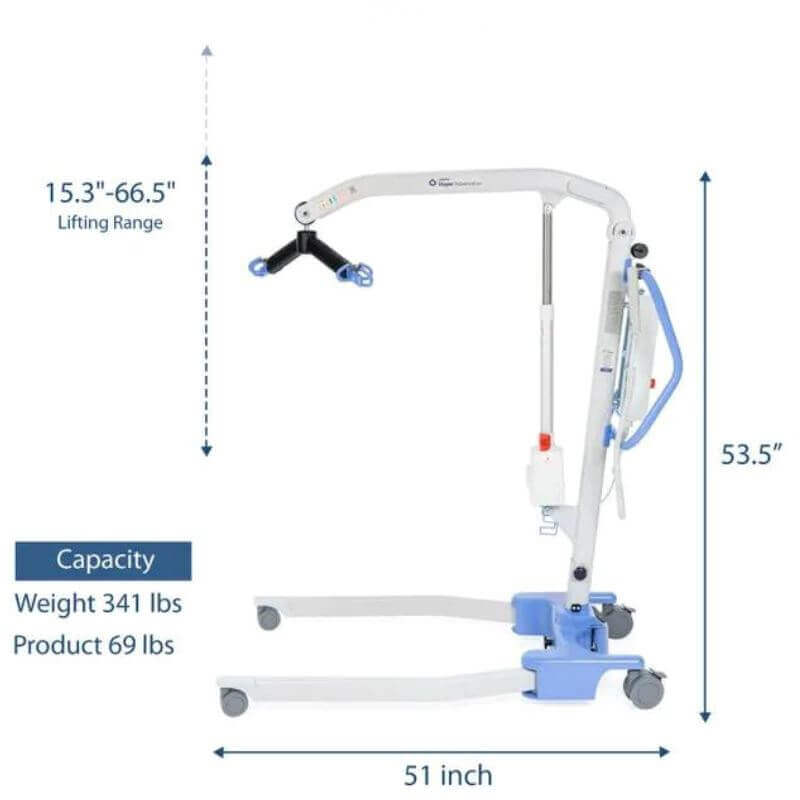
| Hoyer Calibre | Floor lift | 850 lbs | Highest-capacity floor lift; built-in monitor shows lift counts and service reminders |
| Molift Air 350 | Ceiling lift motor | 770 lbs | High capacity on a ceiling track or freestanding rail |
| Hoyer HPL700 | Floor lift | 700 lbs | Powered base opens and closes the legs at the touch of a button; wide cradle |
| Molift Mover 300 | Floor lift | 661 lbs | Quick-release sling bars in different sizes; lifts from about 14" to 70" for floor pickups and gait training |
| Molift Air 300 | Ceiling lift motor | 660 lbs | No pushing a loaded lift across the floor; needs a rail or freestanding track |
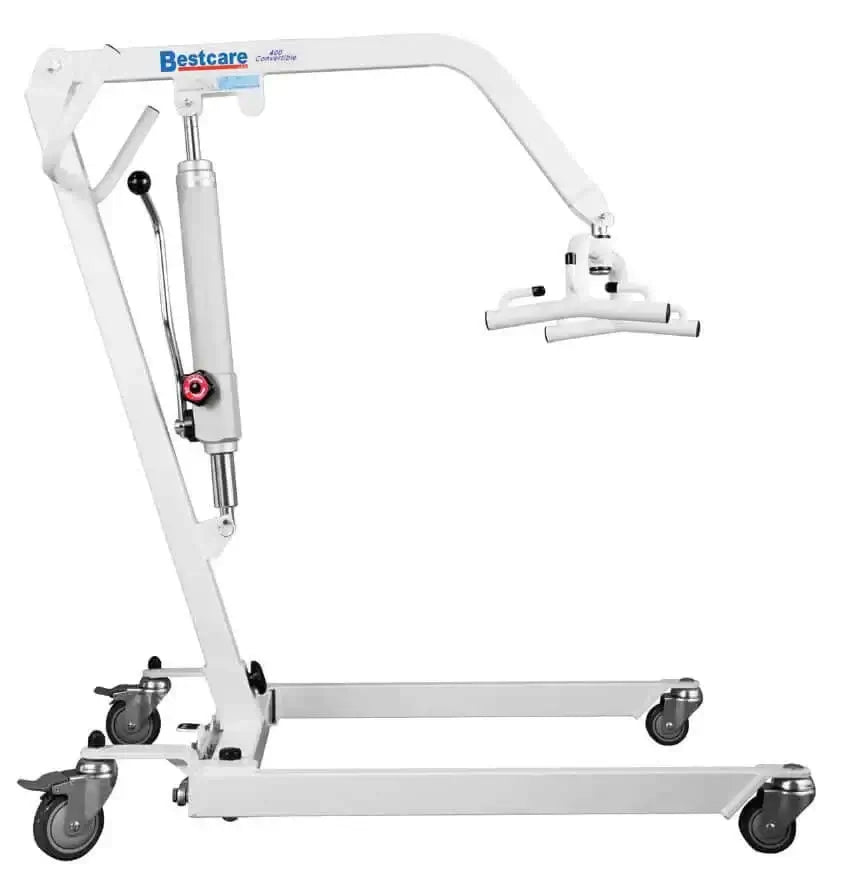
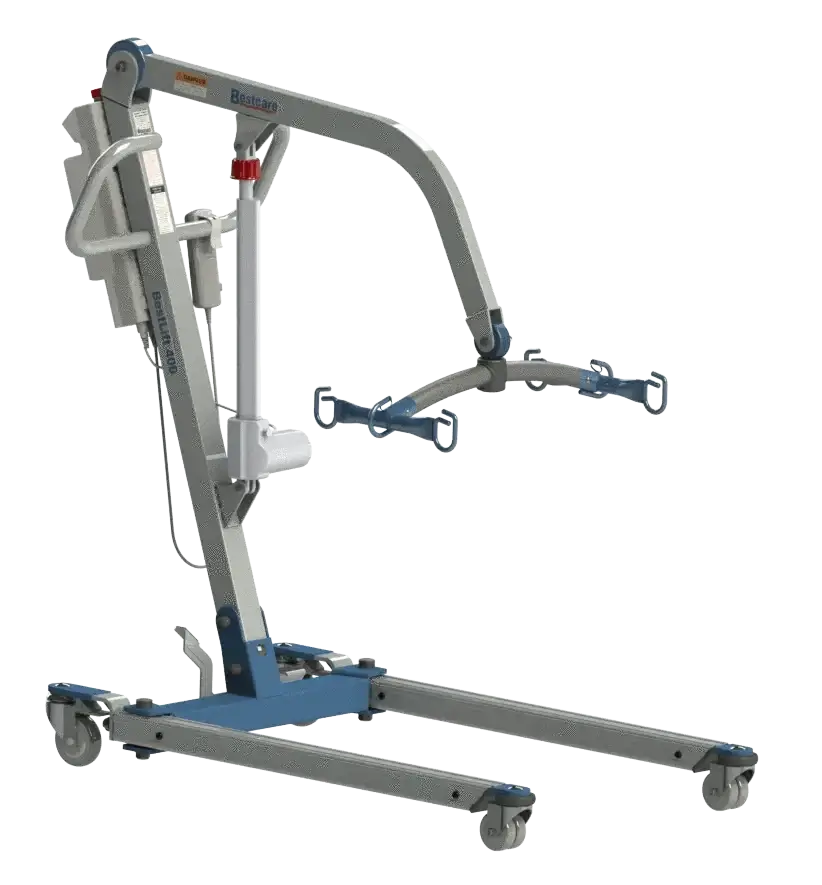
| Bestcare BestLift PL600 | Floor lift | 600 lbs | Electric bariatric floor lift |
| Molift Partner 255 | Floor lift | 560 lbs | Lifting range of 14.5" to 70.4"; straight column and fixed sling bar for stability |
Ceiling motors need a ceiling track or a freestanding rail rated for the same weight, such as the Molift Quattro (660 lbs). Browse all options in bariatric patient lifts and ceiling lifts.
7 Things to Check Before You Buy
- Weight capacity of every part. The lift, spreader bar, sling, track, and any scale attachment all have their own ratings. Use the lowest as your limit, and leave a margin above the person's current weight.
- Body width, not just weight. A heavier person often needs a wider spreader bar and a larger sling so the straps don't press into the shoulders, arms, or hips.
- Base width and leg opening. A floor lift's legs must open wide enough to straddle a bariatric wheelchair, commode, or recliner. Measure the chair before you buy.
- Lifting range. Make sure it reaches low enough for floor recovery and high enough for the bed.
- Powered features. Electric lifting is a must at these weights; a powered base saves caregivers from forcing the legs open.
- Room and doorways. A loaded floor lift needs turning room and clear, flat floors. Thick carpet makes heavy loads much harder to push.
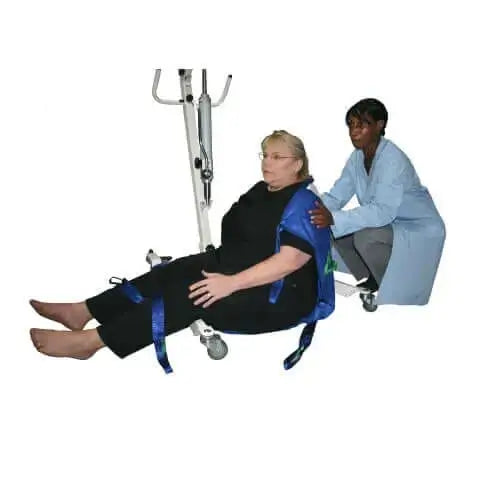
- Who's operating it. Plan for two trained caregivers for bariatric transfers, and choose a lift they can handle comfortably.

Floor Lift vs. Ceiling Lift for Heavier People
Portable
- Moves room to room
- No installation
- Caregivers must push the loaded lift
- Needs floor space and turning room
Overhead
- No pushing weight across the floor
- Saves floor space
- Needs a ceiling rail or freestanding track
- Covers only the rooms with track
For very heavy people, many safe patient handling programs prefer ceiling lifts. A VA safe patient handling coordinator put it simply: if a patient is morbidly obese, a ceiling lift is the preferred device. If installing track isn't practical, a powered bariatric floor lift is the next best option.
Choosing a Bariatric Sling
The sling has to be rated as high as the lift, and sized for the person's width and girth, not just their height.
Molift RgoSling MediumBack Plus
Built for plus-size users with padded leg support and full-body support. View sling
Hoyer Bariatric Full Back
A full-back bariatric sling matched to Hoyer's heavy-duty lifts. View sling
Not sure which style? Our patient lift sling guide explains every type, plus loop vs. clip compatibility and sizing.
Safety Tips for Bariatric Transfers
- Use two trained caregivers and plan the transfer before you start.
- Never exceed the lowest-rated component's capacity.
- Inspect the sling and lift before every use, and keep the battery charged. See our lift battery guide.
- Clear the path and use the lift's brakes only as the manual directs.
- Know the emergency lowering feature before you need it.
- Protect dignity: explain each step, keep the person covered, and use respectful language.
Paying for a Bariatric Patient Lift
Medicare Part B can cover patient lifts as durable medical equipment when a doctor prescribes one for use at home and you use a Medicare-enrolled supplier. Medicaid, VA benefits, and some private insurance plans may also help. See our funding guide for more options.
Frequently Asked Questions
What is the best patient lift for a morbidly obese person?
One rated comfortably above the person's weight, with electric lifting, a wide spreader bar, and a sling rated just as high. Among the lifts we carry, the Molift Air 500 ceiling lift is rated for 1,100 lbs, and the Hoyer Calibre floor lift for 850 lbs. A ceiling lift is often preferred when installing track is possible.
What weight capacity do I need in a bariatric lift?
More than the person's current weight, with a margin for weight changes. Remember the lift, spreader bar, sling, track, and any scale must all be rated for the weight; the lowest rating is your limit.
What is the weight limit of a standard Hoyer lift?
It depends on the model. Many standard lifts are rated around 400 to 450 lbs, while bariatric lifts are rated higher, such as 700 lbs for the Hoyer HPL700 and 850 lbs for the Hoyer Calibre.
Do I need a special sling for a bariatric lift?
Yes. Use a sling rated at least as high as the lift and sized for the person's width and girth, such as the Molift RgoSling MediumBack Plus (1,100 lbs) or the Hoyer Bariatric Full Back sling (850 lbs). The sling must also match the lift's attachment style.
Can one caregiver use a bariatric patient lift?
Some lifts are designed so one caregiver can operate them, but for bariatric transfers two trained caregivers are safer. Always follow the lift manual and your care plan.
Is a ceiling lift better for a heavy person?
Often, yes. A ceiling lift carries the weight overhead so caregivers don't have to push a loaded lift across the floor, which is why many safe patient handling programs prefer it for very heavy patients.
Does Medicare cover a bariatric patient lift?
Medicare Part B can cover a patient lift as durable medical equipment when it's prescribed for home use and supplied by a Medicare-enrolled supplier. Check your plan for details.
Talk to Us Before You Buy
Tell us the person's weight, the rooms, and the chairs and bed you transfer to. We'll recommend the right bariatric lift and sling.
Call 888-307-1839Shop Bariatric LiftsSources: James A. Haley VA Hospital safe patient handling program, via Relias Media and Clinician.com · Medicare.gov, Patient lifts · Hoyer, Molift, and Bestcare product specifications. General information, not medical advice.


Leave a comment